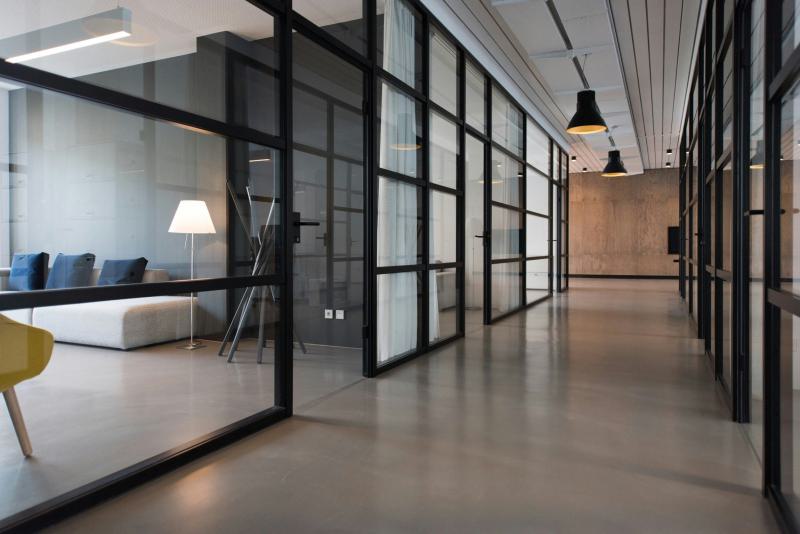
CRI, UGR, color temperature
There are three values on every luminaire datasheet worth checking before a decision is made. Alongside wattage and lumens, these three decide whether the light will be pleasant or disturbing.
CRI: color rendering
CRI shows how faithfully the light renders colors compared to natural light. Below CRI 80, skin tones look washed out, wood loses its warmth, and reds and deep blues blur together. Homes, shops and showrooms call for at least CRI 90; clothing stores, hair salons and dental offices for CRI 95.
It's worth knowing that CRI is the average of 8 test colors, and saturated red (R9) isn't among them. That's why a CRI 90 lamp can still make reds look lifeless: in these cases the R9 value is low. Quality manufacturers list it separately.
UGR: glare
UGR measures how disturbing a luminaire's light is when you look into it. In offices and at screen-based workstations UGR 19 is expected, in industrial environments UGR 22-25 is acceptable, and for precision drafting work the target is UGR 16.
An uncovered LED panel is very efficient, but its UGR is often unacceptable. The version with microprismatic or recessed optics loses a few percent of light, but in return the headaches and the reflections on the monitor disappear. This is the item where cutting corners pays off least.
Color temperature
2700 K is warm, yellowish light: for living spaces, dining rooms, bedrooms. 3000 K is neutral warm: good for kitchens, bathrooms and living rooms too. 4000 K is cool white: for offices, workshops, garages. Going above 5000 K only makes sense in technical spaces.
Never mix color temperatures within one room: two luminaires 500 K apart side by side stand out immediately and look cheap. The same goes for later replacements: if a luminaire fails, the replacement has to come with the same value. That's why it's worth specifying the color temperature per type in the plan, and ordering a few spares as well.